
Boats · EU
Waterless toilets for boats: installation and servicing checks
Considering a waterless toilet on a boat? Check heel, containment, service access, ventilation, fan power and marina disposal requirements.
Quick answer
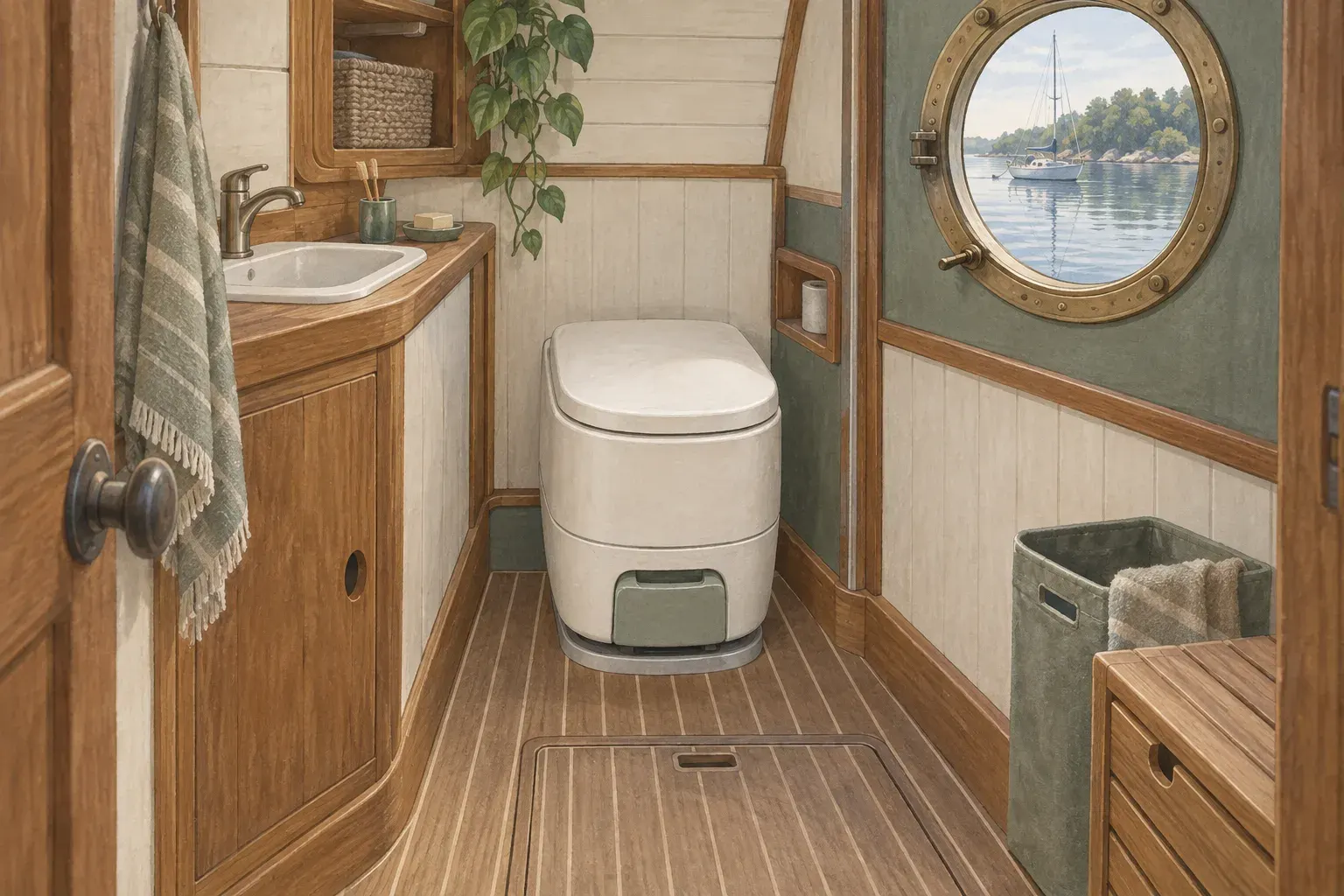
A boat installation must account for movement as well as space. Check containment, secure mounting, access to containers and the manufacturer’s installation requirements before planning ventilation and marina servicing.
A boat adds movement, moisture, corrosion and restricted discharge rules to an already compact installation. A domestic or cabin solution should not be assumed suitable without checking those conditions.
Start with the operating area
Rules differ across inland waterways, coastal waters, harbours and marinas. Confirm requirements with the relevant navigation authority, harbour or marina and retain a compliant shore-side disposal plan.
Never treat a product’s environmental description as permission to discharge or dispose of material in a particular location.
Measure access under way
Check seated space, doors, hatches and container removal while accounting for the boat’s movement. Containers and internal parts need positive retention during heel, wake and rough conditions.
Avoid creating openings or fastener loads in hull and deck structures without understanding construction and waterproofing. A competent marine installer may be appropriate.
Route ventilation for marine conditions
Plan duct resistance, outlet position, water exclusion and wind effects. The outlet should not draw exhaust back through hatches or neighbouring openings. Use materials and electrical connections suitable for the damp, potentially corrosive environment.
Include continuous electrical load
Where a fan runs continuously, calculate daily amp-hours and the effect of unattended periods. Decide how the system remains safe if shore power is disconnected or the battery isolator is used.
Plan shore-side servicing
Consider container weight, steps, pontoons and the distance to an approved facility. Keep closures and bad weather in the reserve-capacity calculation.
Wear gloves and wash your hands after emptying, and secure portable disposal receptacles so nothing can spill under movement.
A successful marine installation is secure under movement, ventilated in changing wind, electrically sustainable and compatible with every authority on the intended route.
Continue your planning
Work through your own plan
Campervan toilet space planner
Will the toilet fit and can you still remove the container?
Off-grid toilet chooser
Which toilet categories deserve a closer look for your installation?
Toilet emptying-interval estimator
Can the liquid container reach the next servicing opportunity?
Off-grid toilet installation checklist builder
What must be resolved before fitting this toilet?
Continue planning
Related guides

Portable toilet comparison
Best portable composting toilet for a campervan: keep the trip simple
Capacity planning
Waterless toilet capacity: estimate a realistic emptying interval
Campervan toilet service access