
System types · EU
Separating vs composting toilets: differences that matter
Compare separating and composting toilets: waste handling, storage, maintenance and what to ask suppliers before choosing an off-grid system.
Quick answer
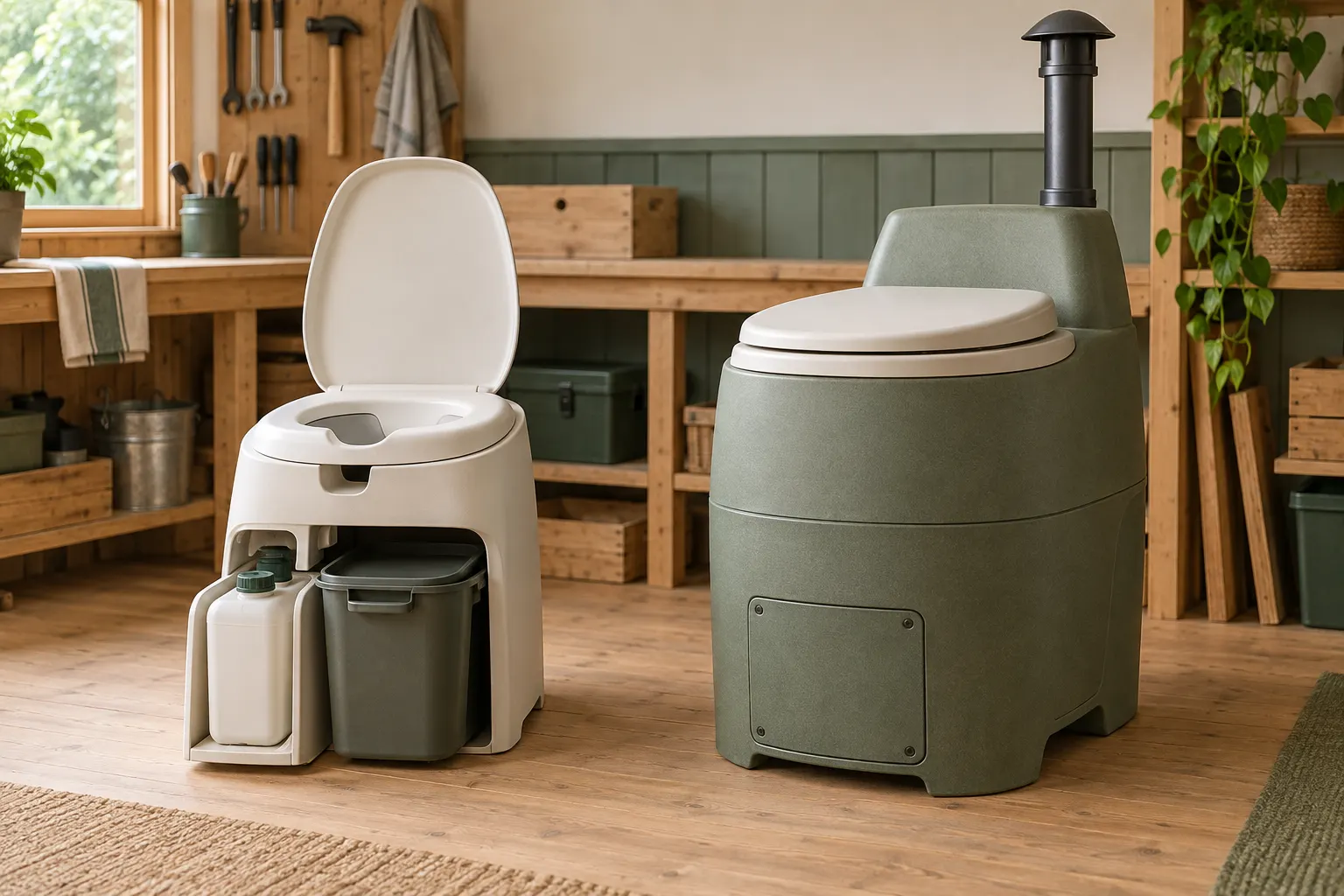
A separating toilet directs urine and solids into separate routes. A composting system aims to support decomposition in a chamber. Neither label establishes that the output is safe to spread or that disposal is permitted.
The most useful comparison is not the label on the product page. It is the material flow through the toilet and the work required after use.
Separating systems
A urine-diverting dry toilet directs liquids and solids into different routes or containers. Separation can reduce odour and volume, but the contents still need appropriate handling and disposal. Capacity should be evaluated for each stream separately.
Composting systems
An active composting toilet aims to support biological decomposition in a chamber. Performance depends on time, temperature, moisture, oxygen and loading. A chamber does not make finished, unrestricted compost instantly.
Treat the output as human waste until you have verified the process. A chamber does not automatically produce safe, finished compost. Material leaving the unit can still contain disease-causing organisms, so wear gloves when handling it, wash your hands afterwards and only treat or spread it in a way you have confirmed is lawful for your situation.
Questions that expose the difference
Ask the supplier:
- Where does each waste stream go?
- What must the user add, empty, mix or clean?
- What condition is the solid output in when removed?
- What further storage, treatment or disposal is required?
- Which claims depend on installation, temperature or usage rate?
Those answers are more decision-useful than the category name alone.
Continue your planning
Work through your own plan
Off-grid toilet chooser
Which toilet categories deserve a closer look for your installation?
Continue planning
Related guides

Portable toilet comparison
Best portable composting toilet for a campervan: keep the trip simple
Capacity planning
Waterless toilet capacity: estimate a realistic emptying interval
Campervan toilet service access