
Running costs · UK
Waterless toilet running costs: build a complete ownership budget
Compare waterless toilet running costs, including consumables, fan electricity, servicing, disposal and replacement parts as well as purchase price.
Quick answer
Compare installed cost plus recurring costs over the same ownership period and in the same currency. Include consumables, fan power, servicing, disposal and scheduled replacements, using your own prices and usage estimates.
The purchase price is only the first line of a waterless toilet budget. Two systems with similar fixtures can create different recurring costs and maintenance workloads.
Separate fixed and variable costs
Fixed costs include the toilet, ventilation, spare containers, installation materials and professional work. Variable costs may include liners, bulking material, cleaning supplies, electricity, transport and disposal.
Record replacement intervals for fans, seals and other service parts where the manufacturer provides them. Confirm that spares are available in your country rather than assuming a generic component will fit.
Price the actual usage pattern
Estimate annual occupied days and users. Apply conservative service intervals and include peak periods. A low-use holiday cabin should not be costed like a full-time home, and a hire vehicle needs allowance for less predictable operation.
Put a value on servicing
Even when owners do the work, servicing consumes time, travel and storage. For managed sites, boats or rentals, include staff time and the consequences of an unexpected service visit.
Verify disposal assumptions
Do not assume outputs can be disposed of free of charge or on the property. Check the lawful route for the location and include containers, transport or contractor fees where applicable.
Compare over several years
Use a three- or five-year worksheet: installed cost, annual consumables, electricity, routine servicing and plausible replacement parts. Keep uncertain figures as ranges instead of false precision.
A lower lifetime cost is valuable only if the system also fits the space, capacity, legal route and maintenance routine. Cost should narrow compatible options, not excuse an incompatible installation.
Continue your planning
Work through your own plan
Off-grid toilet running-cost calculator
What will the toilet cost to operate under your usage pattern?
Cover-material consumption calculator
How much cover material should you buy beyond the stock you have?
Off-grid toilet ownership-cost comparison
How do the toilet options compare over the years you will own them?
Continue planning
Related guides
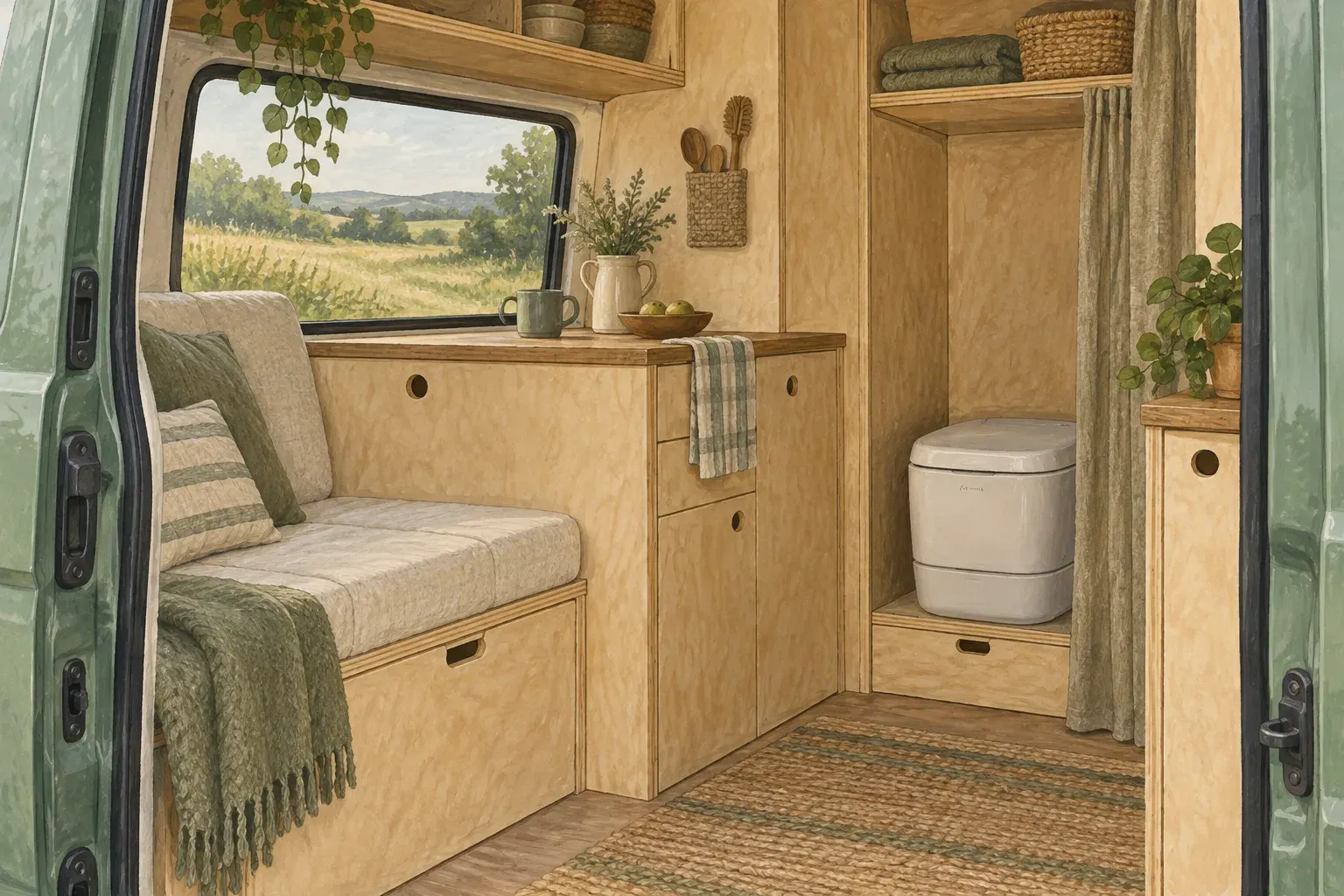
Portable toilet comparison
Best portable composting toilet for a campervan: keep the trip simple
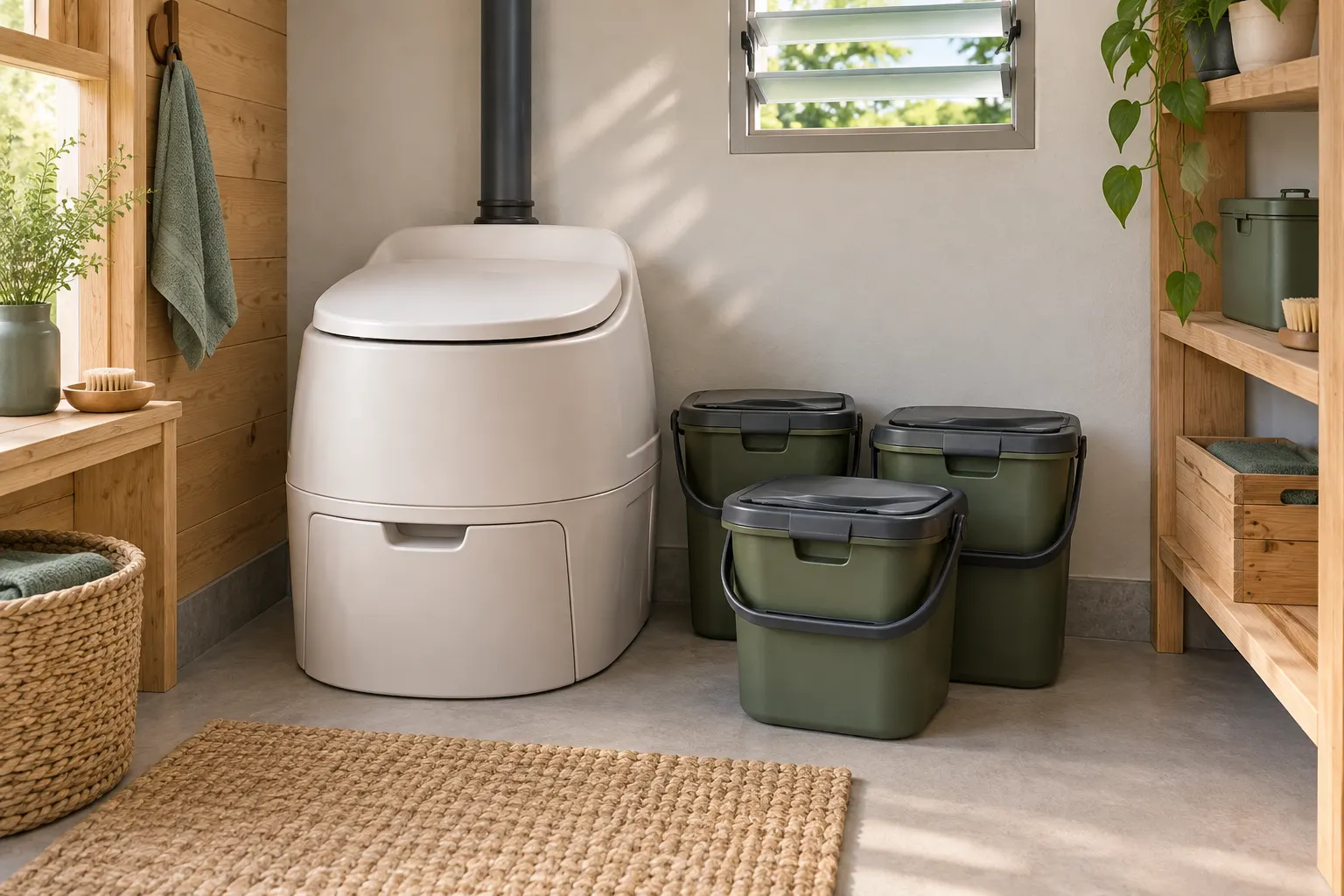
Capacity planning
Waterless toilet capacity: estimate a realistic emptying interval
Campervan toilet service access