
Everyday use · EU
Make a separating-toilet guest card people can follow
Turn the operating instructions into a short, model-specific guest card, with a Trelino example and a practical check before visitors arrive.
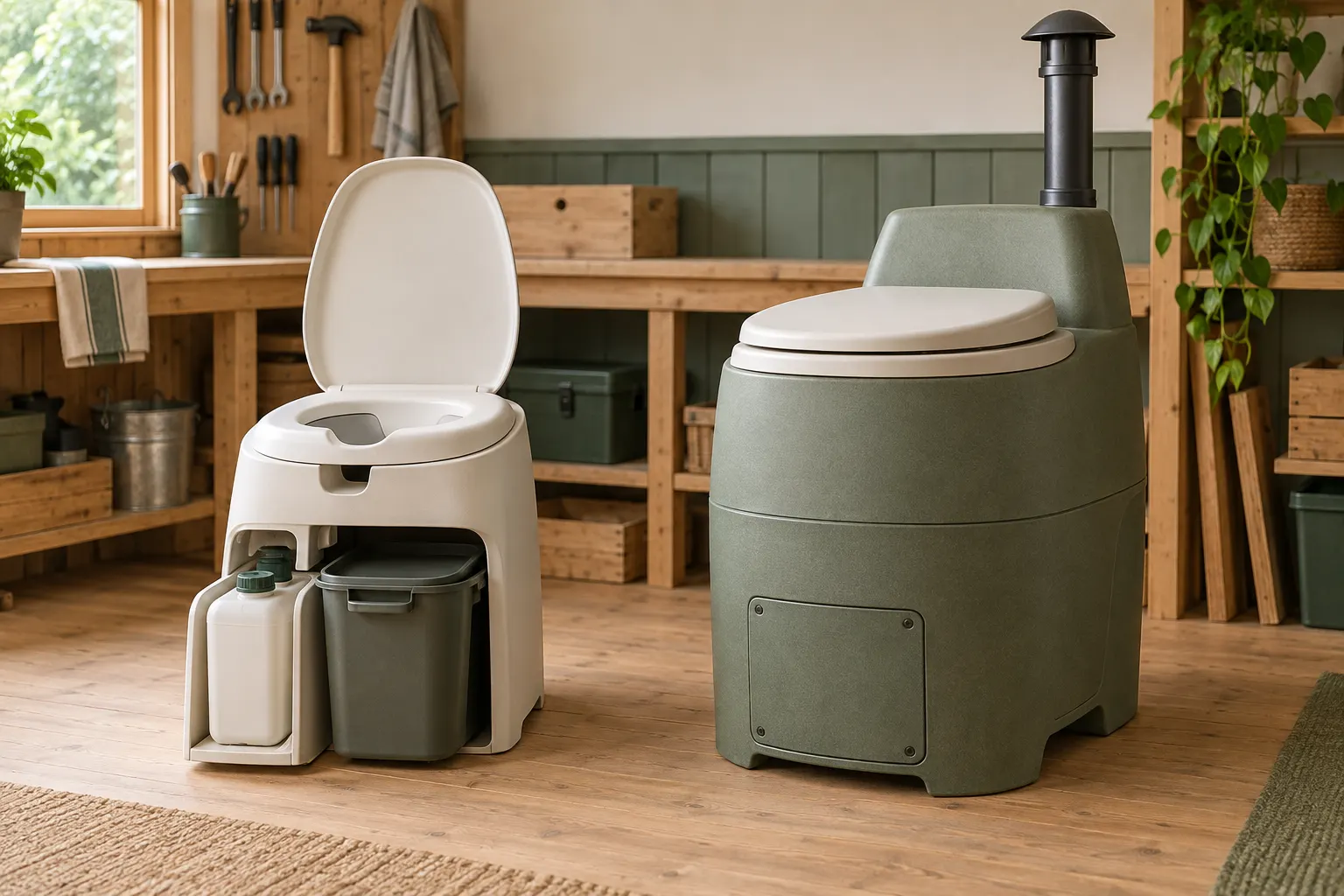
Make the guest card for the exact toilet you own, and put the actions in the order a visitor needs them: how to sit, where paper goes, what to do afterwards and how to ask for help. Keep container checks and servicing with the host. A guest should be able to complete an ordinary visit without interpreting your maintenance routine.
The example below follows Trelino’s published operating guidance. Check it against the instructions supplied with your particular model before displaying it. Its purpose is to show how to shorten instructions without changing their meaning.
Start with the model and the source
Write the model name at the top of your draft. Keep a separate host note with the manual version or filename, the date you checked it and the page containing the operating steps. This makes the card easier to review when the toilet or instructions change.
Trelino’s manufacturer-linked instruction manual specifies seated use, liquids towards the front, and solids and toilet paper towards the rear. It also instructs users to cover solids with litter and to keep hygiene products separate. Those are operational details that can become clear guest actions. Trelino instruction manual, linked from the manufacturer’s guidance page and manual download.
The linked document is a US-distributed manual. This example uses its operating steps without adopting its regional waste-handling advice or product measurements. For a UK or EU unit, the host must check the instructions supplied with that unit before using the card.
Explain the parts visitors can see
Use ordinary words alongside any technical terms. A small drawing labelled “front: urine” and “rear: solids and toilet paper” can make the layout easier to recognise. Draw the toilet you have, including any visible control; do not use a generic diagram that introduces a handle or flap absent from your model.
Avoid prescribing one exact posture for everyone. Trelino’s FAQ explains that sitting position can need adjustment and that some users may need to sit more upright or nearer the front. A brief private explanation before first use gives the guest room to ask about this. Trelino operating FAQ
Position the card where it can be read before sitting down. Check that the guest can see the labelled supplies from there. If your available space is tight, the campervan toilet space planner can help you reconsider the surrounding layout; follow that with a physical check in the actual room.
A Trelino guest-card draft
Use this draft only after confirming that it matches your unit’s instructions. Replace the bracketed words with the actual location and host name.
Using this Trelino
- Please sit down for every use. The urine opening is at the front; solids go into the rear opening.
- Put used toilet paper into the rear solids container. Keep hygiene products out of the toilet.
- After a bowel movement, use the supplied cup to add one to two cups of cover material over the solids. Cover damp toilet paper with a little cover material too.
- Close the lid slowly and carefully.
- If anything spills, seems full or feels unclear, stop and ask [host name, contact/location]. Please leave container handling to the host.
The cup quantity comes from the operating diagram in the linked manual. The same document addresses covering damp toilet paper and careful lid closure. Keep the cup supplied for this routine beside the material so guests are not choosing between kitchen measures. Trelino operating instructions, pages 3–4 and 7
The final help line is a proposed household arrangement, not a manufacturer requirement. Fill it with a contact method that actually works during the visit.
Do not borrow another toilet’s routine
A familiar-looking separating toilet can have different controls. Nature’s Head’s FAQ, for example, recommends keeping its trap door closed for urination-only use and explains how that routes liquid to the bottle. That control instruction belongs to that toilet; it should not appear on a Trelino card. Nature’s Head operating FAQ
Use comparisons only while checking your draft. Remove irrelevant controls from the finished card, and link guests to the exact manufacturer guidance for the toilet in front of them if they want more detail.
Similarly, settle the paper instruction before visitors arrive. Give one clear instruction on the card, checked against your model’s guidance. Avoid asking a guest to choose between several routines described across different websites.
Prepare the host routine separately
Before guests arrive, check the containers and supplies yourself. Trelino’s manual requires regular fill-level checks and checking that the containers and odour trap remain correctly positioned after transport. These are host preparation tasks in this suggested arrangement. They do not need to become a visitor’s responsibility. Trelino instruction manual
Use the capacity and service-interval guide to plan checks around the visiting group. Keep cleaning procedures on your separate component-by-component cleaning plan. The guest card can simply direct a visitor to the host when attention is needed.
For a hypothetical visit, imagine two friends arriving for a weekend. Before arrival, show an unfamiliar reader the draft beside the toilet and ask them to point to the paper destination, cover material and help contact. Do this without using the toilet. If they reach for the wrong supply or cannot identify an opening, change the label or placement and repeat the check.
That rehearsal tests whether your instructions are understandable. It does not establish suitability for every visitor. Discuss individual access or assistance needs privately, and supervise young children as Trelino’s manual requires. Leave the full operating instructions available to the host throughout the visit.
Continue planning
Related guides
Portable toilet comparison
Best portable composting toilet for a campervan: keep the trip simple
Capacity planning
Waterless toilet capacity: estimate a realistic emptying interval
Campervan toilet service access