
Occupancy and service records · UK
Keep a first-month toilet log that separates routine from capacity
Record occupancy, separate service events and the reason each container was changed, then choose a provisional routine without overstating capacity.
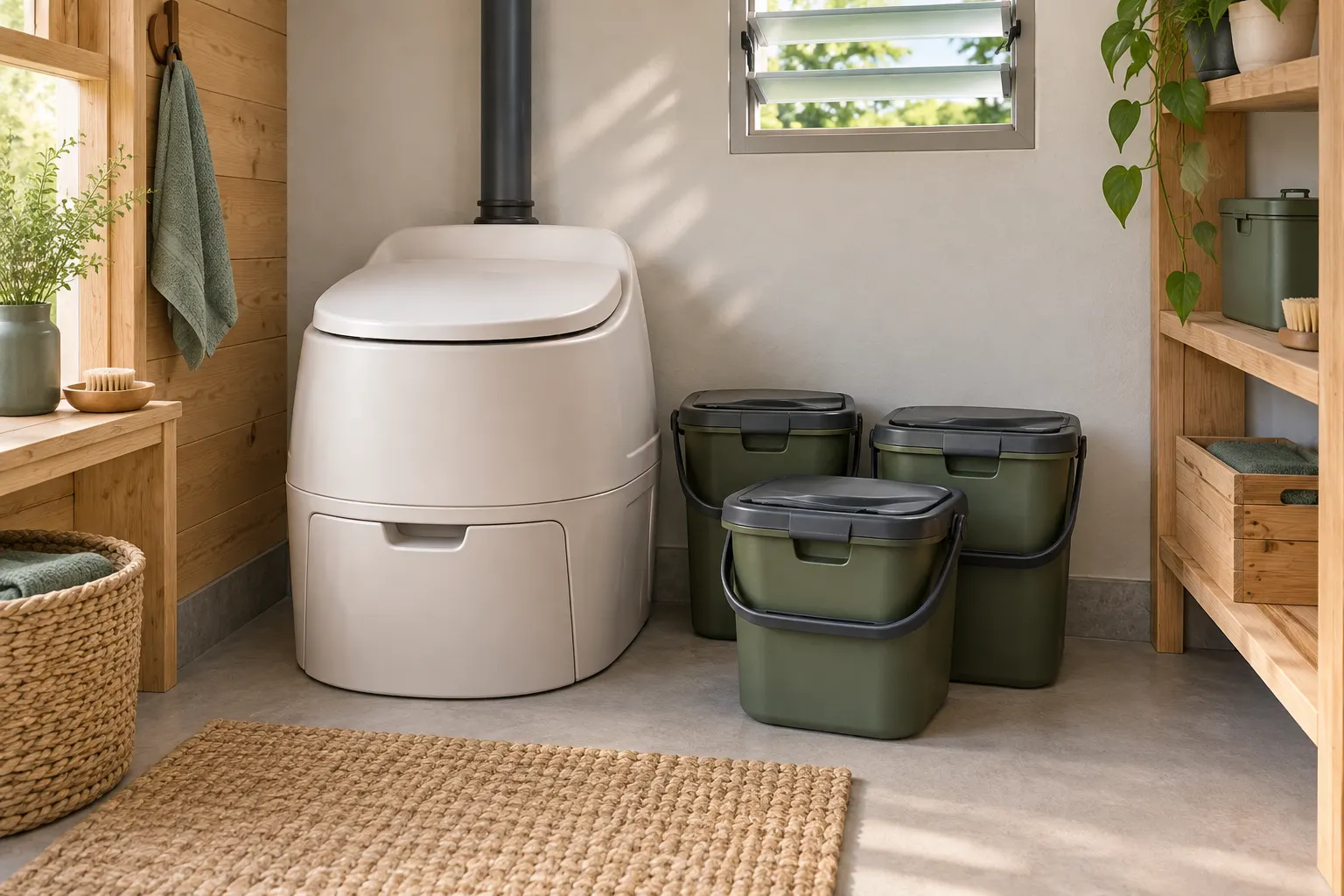
During the first month, record who actually used the toilet, when each container was serviced and why the service happened. Keep liquid and solids records separate. Use the results to choose a provisional inspection and service routine, while keeping the manufacturer’s instructions as the operating boundary.
The most useful distinction is between a container changed because it reached the relevant service point and one changed early for convenience. An early change tells you about your routine. It does not establish the container’s maximum interval.
If you have already used the emptying-interval estimator, retain that first estimate. Your log will show which assumptions need revisiting. The existing capacity and service-interval guide covers the planning calculation; this article is about collecting observations that make the next calculation more honest.
Start with the exact configuration
Give the log a heading containing the toilet model, version and container arrangement. Add the date and title of the instructions you are following. Record a configuration change as a new section rather than blending its results into the earlier record.
This matters even within one product family. Separett’s Tiny product page identifies a version with an internal urine container and gives separate indicative service intervals for liquids and solids under a stated two-user assumption. Those are manufacturer reference conditions, rather than your household’s measured result. Separett Tiny with urine container
Identify spare containers individually if you use them. Separett lists its replacement urine container for Tiny and Weekend Prime models, illustrating why the exact accessory identity belongs in the record. Do not infer that a different container fits from a similar appearance. Separett’s container identification
Your log need not reproduce operating or cleaning instructions. Keep those beside it and use the exact manufacturer guidance for the equipment you own.
Record exposure to use, without collecting personal details
A headcount alone can leave a large gap. Two people staying overnight might use other facilities for most of the day. Record attendance and actual toilet use separately wherever practical.
A simple daily entry can contain:
| Field | What to record |
|---|---|
| Date | The day covered by the entry |
| Occupancy | Number present, with full or partial day noted |
| Toilet use | Anonymous visit tally, or explicitly marked unknown |
| Other facilities | Whether users also relied substantially on another toilet |
| Configuration | Any container or routine change |
| Check | Observation made according to the model instructions |
Keep the visit tally anonymous. You do not need names, health information or explanations of individual habits for this planning exercise.
Define your own shorthand once. For example, use “partial day” rather than converting every brief visit into a fraction of a person-day. Consistent coarse observations are more useful here than precise-looking figures assembled from guesses.
A blank entry means missing information. Write “no use” when that is what happened, and “unknown” when you cannot establish it. This keeps quiet days separate from forgotten records.
Give every service event a reason
For each liquid or solids event, record the date, approximate time, container identity and reason. Suggested reasons are: manufacturer service point, scheduled care, departure preparation, convenient opportunity, or problem requiring attention. Add a short note if more than one applies.
Manufacturer care advice can require attention before a container reaches its nominal volume. Trelino’s FAQ, for example, describes a recurring urine-canister care interval and advises more frequent emptying in very hot weather. That is guidance for Trelino products, rather than a universal schedule for separating toilets. Trelino’s care FAQ
This is why “changed after three days” needs a reason beside it. Without that note, a later reader cannot tell whether the container reached its service point, the trip ended, or someone preferred to complete the task before leaving.
Do not extend an interval merely to obtain a fuller data point. The log is an observation method within the instructions you follow. It is not a capacity stress test.
Read the first month as several small observations
Review the record weekly. Look for missing entries and inconsistent labels while the details are still fresh. Keep liquid and solids intervals in separate lists, and place early convenience changes in their own group.
Here is an explicitly hypothetical example, unrelated to any named product. During one liquid-container interval, two people each use the toilet throughout three full days. The recorded occupancy is six person-days: two multiplied by three. The container is then changed before departure, with the service-point field marked “not reached”.
During another interval, two people each use it throughout two full days. That is four person-days. This time the recorded manufacturer service point prompts the change.
It would be misleading to average six and four into a claimed capacity of five person-days. The first interval ended for a different reason. Report the observations separately: one early departure change after six person-days, and one service-point event after four. The difference is a reason to investigate the records and usage conditions, rather than select the larger figure.
For the same reason, leave the final unfinished interval open at the month’s end. Record its start and current status; do not treat the review date as a service event.
Choose what to do next
At the month-end review, write a short decision: retain the present routine, inspect earlier under a particular occupancy pattern, or collect another month because the evidence is incomplete. Include the observation that led to it.
Describe scope plainly: “Observed during weekend stays with substantial use of other facilities” is more informative than “suitable for two users”. A month with no representative busy period leaves peak occupancy untested.
Transfer revised assumptions to the estimator only when the log supports them. Keep the original estimate and the revised version with their dates. The useful outcome is a routine you can explain from actual records, with uncertainties still visible and manufacturer limits intact.
Continue planning
Related guides

Portable toilet comparison
Best portable composting toilet for a campervan: keep the trip simple
Capacity planning
Waterless toilet capacity: estimate a realistic emptying interval
Campervan toilet service access